
Tuesday 2nd June 2026
Gallipoli, the "beautiful city" (from the Greek Kalé Pólis), is a stunning coastal town in the Salento region of Puglia. Famous for its historic old town set on a limestone island, crystal-clear Ionian waters, and lively summer beaches, it perfectly balances southern Italian charm with vibrant nightlife.
Key Highlights
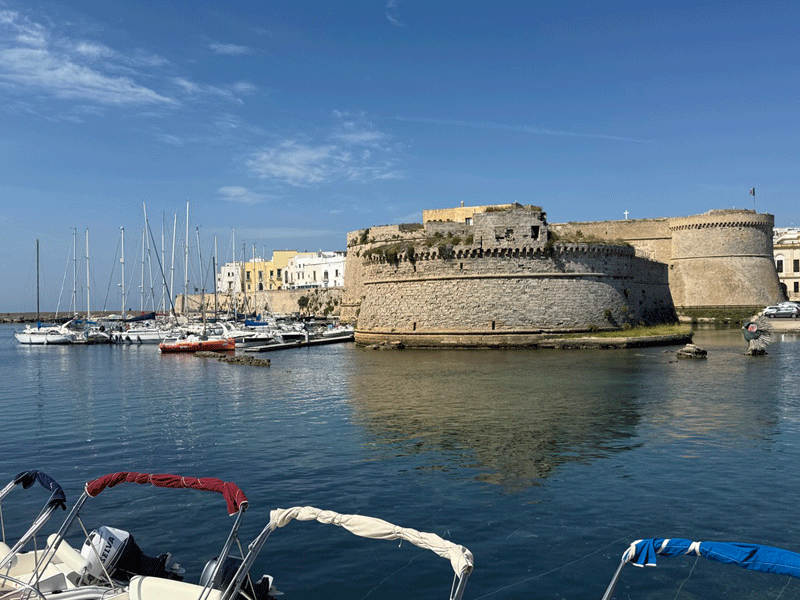
- The Old Town: Accessible only via a 16th-century stone bridge, it features a labyrinth of narrow, whitewashed streets, Baroque palaces, and the 13th-century Castello di Gallipoli.
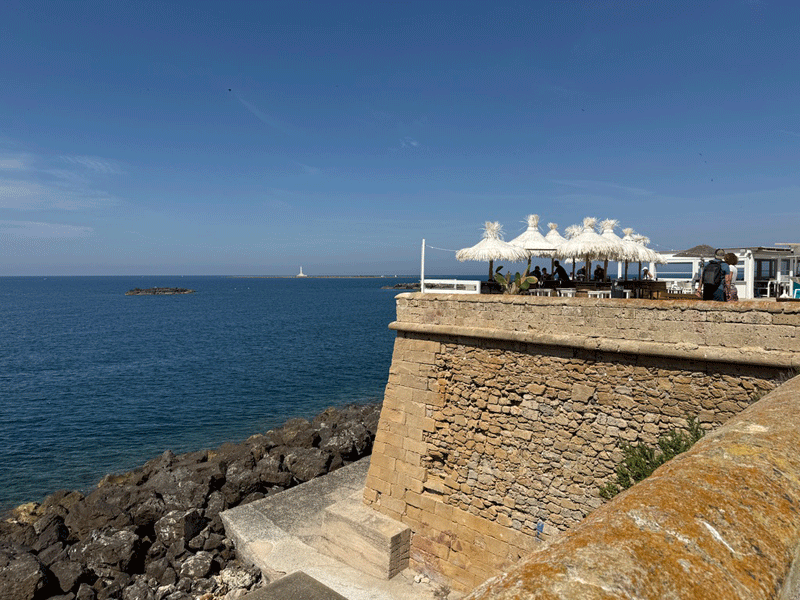
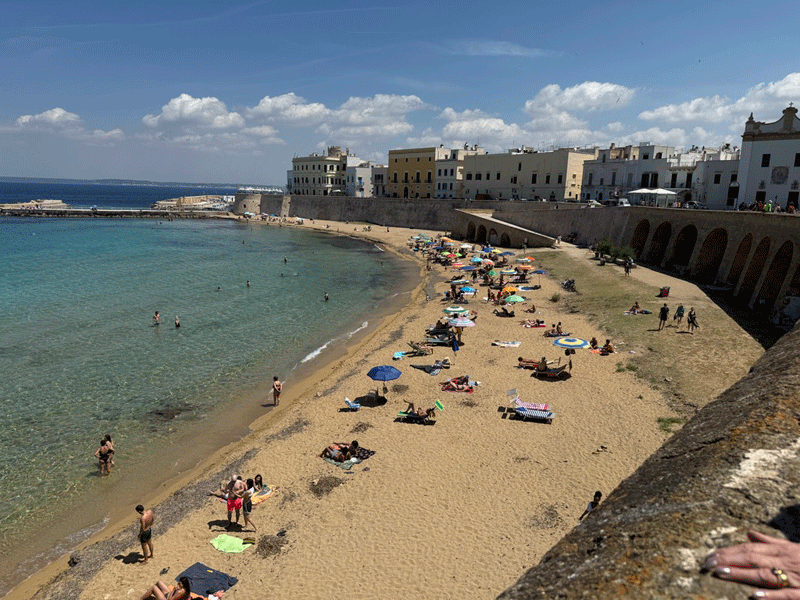
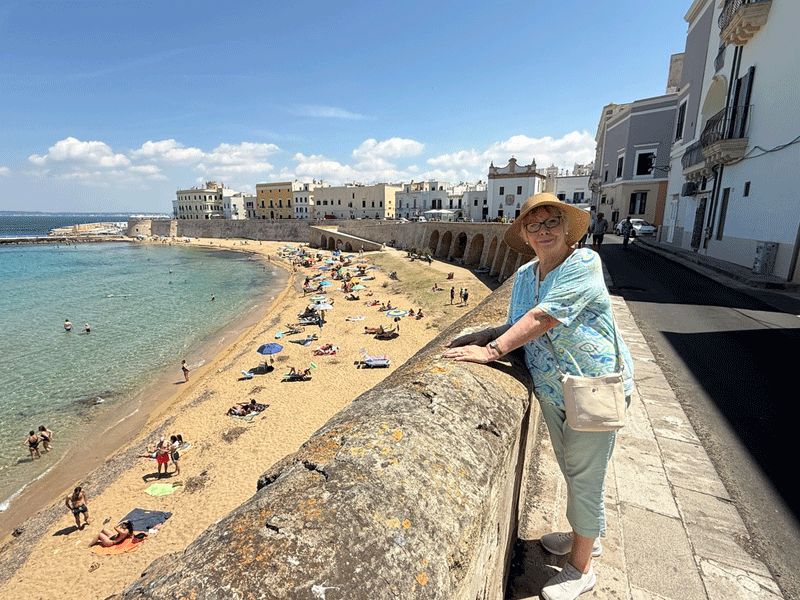
- Spiaggia della Purità: A beautiful, sandy, half-moon city beach nestled right below the ancient seawalls of the old town.
- Baia Verde & Beach Clubs: South of the town are miles of sweeping sandy beaches lined with popular beach clubs, lidos, and nightlife venues.
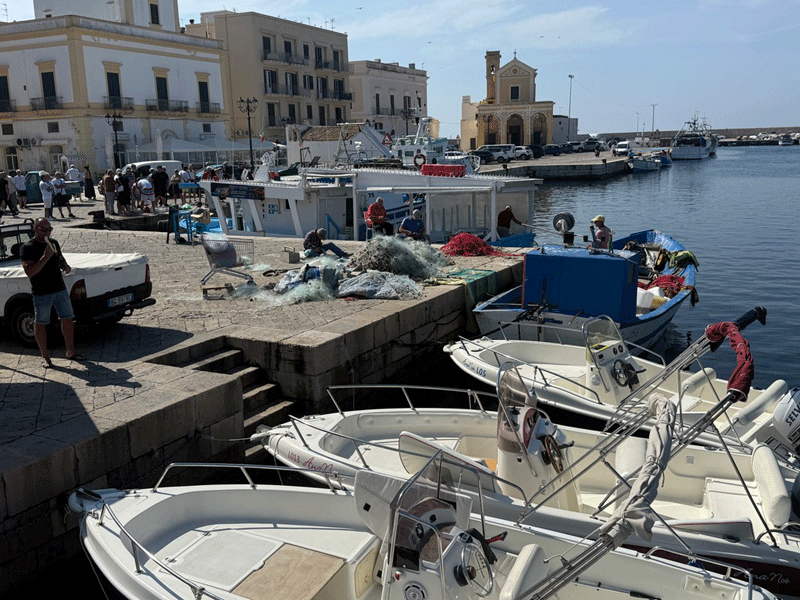
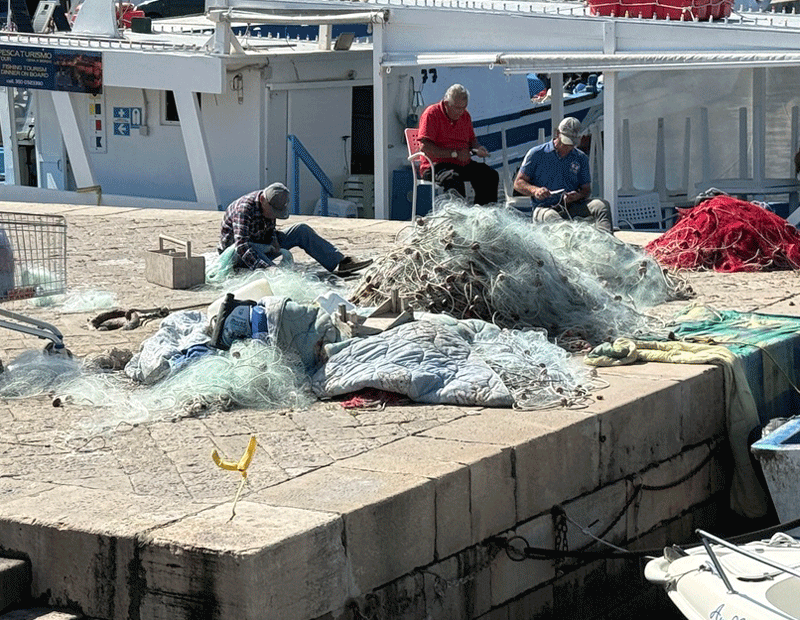
- Fresh Seafood: Famous for its bustling early-morning fish market, the town is a paradise for seafood lovers, particularly known for its local octopus sandwiches (puccia).
|
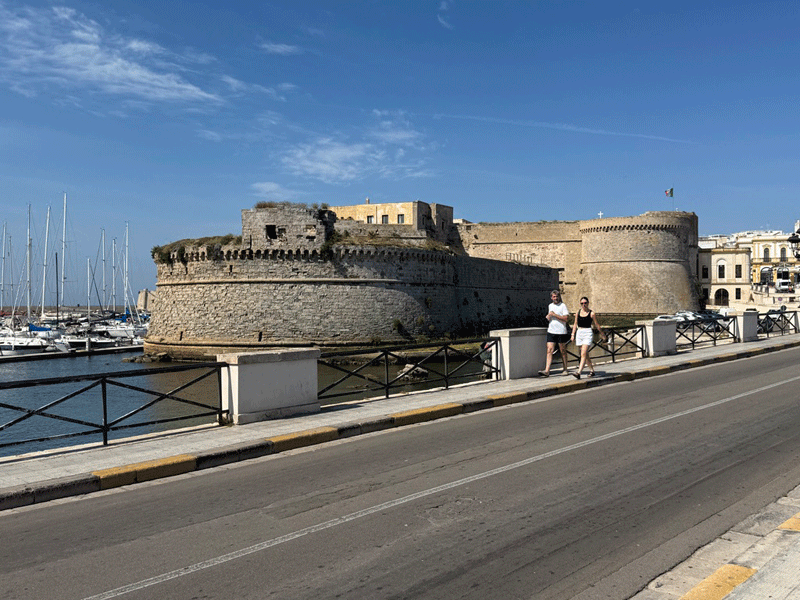
| Angevine-Aragonese Castle, built in the 13th century by the Byzantines. It was largely remade under the Angevins and the Aragonese, who added a polygonal wall fortified with round towers. The main additions were carried on by Francesco di Giorgio Martini, who worked for King Alfonso II of Naples. In 1522 an eastern bastion, known as Rivellino, was built which is defended by waters on three sides. |
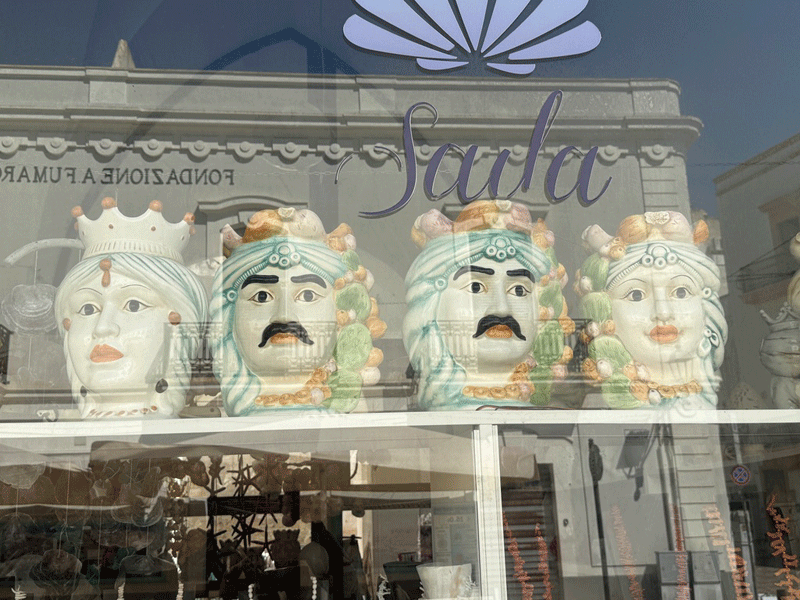
"Testa Di Moro"
Gallipoli has close ties with Sicily, and throughout the town Testa Di Moro heads are offered for sale. The Testa Di Moro (Moorish Head) is one of the most beautiful and also fascinating artisanal pieces in Sicilian folklore. Testa Di Moro hail from the story many decades ago, of a young Sicilian girl who fell in love with a visiting Moor from northern Africa. They fell in love, enjoyed a short lived affair but the joy was cut short when he told her that he would need to soon return to his family and his country. A force to be reckoned with, the young Sicilian waited until her lover was asleep and cut off his head! She kept it as a vase for her balcony and used it to grow herbs and flower. Soon the neighbours began to wonder what the secret to her flourishing garden was. She shared her gruesome secret and it became a trend. Soon, the balconies of Palermo were awash with colourful ceramic odes to the tradition she’d begun. Colourful crowns, depictions of luscious fruits and vegetables and faces of various genders and ages adorn these gorgeous, shapely ceramics. They can be seen and found all over Sicily today, sitting on balconies, hanging on walls, depicted in artworks, and available for locals and tourists to purchase and enjoy. The ultimate destination for a spot of Testa Di Moro shopping is Caltagirone; the renowned ceramics Mecca in south Eastern Sicily. Caltagirone is easily accessible; less than an hour’s drive from well serviced airport in Catania.
(Courtesy of www.dolceitaliana.com)
|
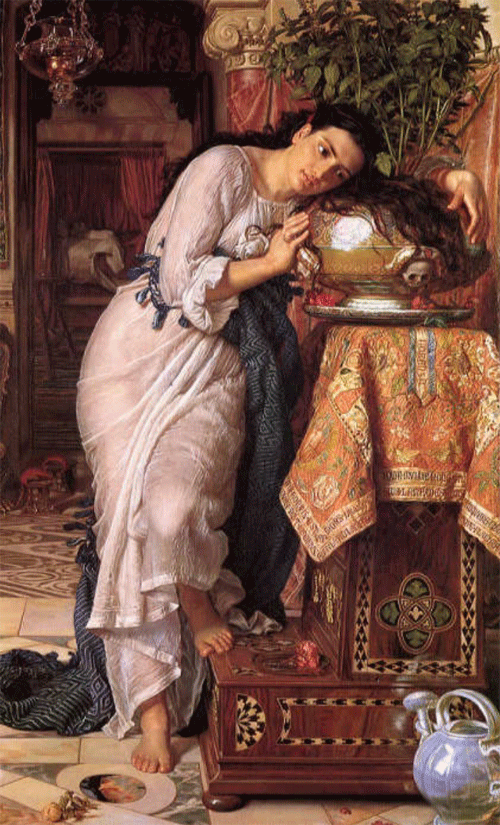
Isabella and the Pot of Basil by William Holman Hunt (1827-1910)
There is another versioin of this story:-
Isabella, or the Pot of Basil (1818) is a narrative poem by John Keats adapted from a story in Boccaccio's Decameron (IV, 5). It tells the tale of a young woman whose family intend to marry her to "some high noble and his olive trees", but who falls for Lorenzo, one of her brothers' employees. When the brothers learn of this, they murder Lorenzo and bury his body. His ghost informs Isabella in a dream. She exhumes the body and buries the head in a pot of basil which she tends obsessively, while pining away.
The poem was a precursor to The Eve of Saint Agnes. Both are set in the Middle Ages and concern passionate and dangerous romances. It was published in 1820 along with the latter work and others.
The poem was popular with Pre-Raphaelite painters, who illustrated several episodes from it, notably Isabella and the Pot of Basil by William Holman Hunt, Isabella and the Pot of Basil by John William Waterhouse and Isabella (also known as Lorenzo and Isabella) by John Everett Millais. Later, John White Alexander depicted the poem in his 1897 Isabella and the Pot of Basil, currently held at the Museum of Fine Arts, Boston. Frank Bridge also wrote a symphonic poem of the same name in 1907.
William Holman Hunt's painting was modelled on his first wife, Fanny Waugh, whom he married in 1861.
Courtesy of Wikipedia |
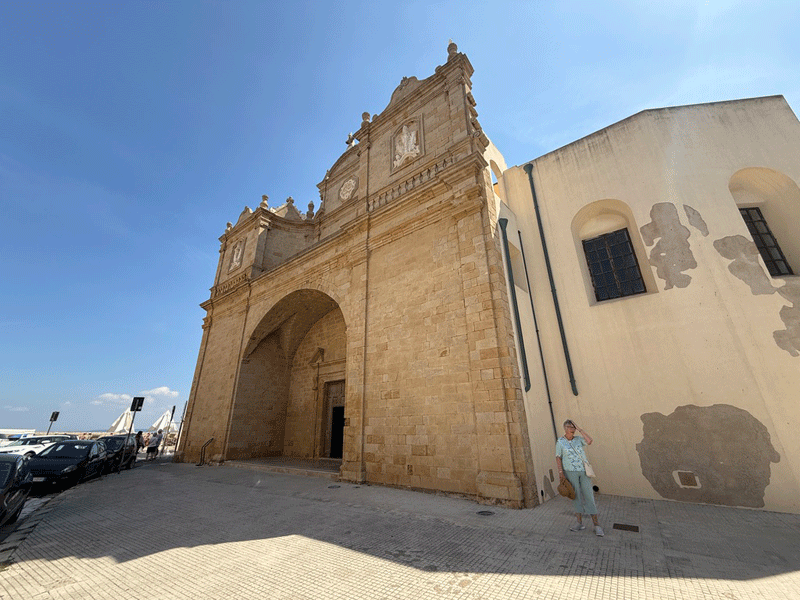
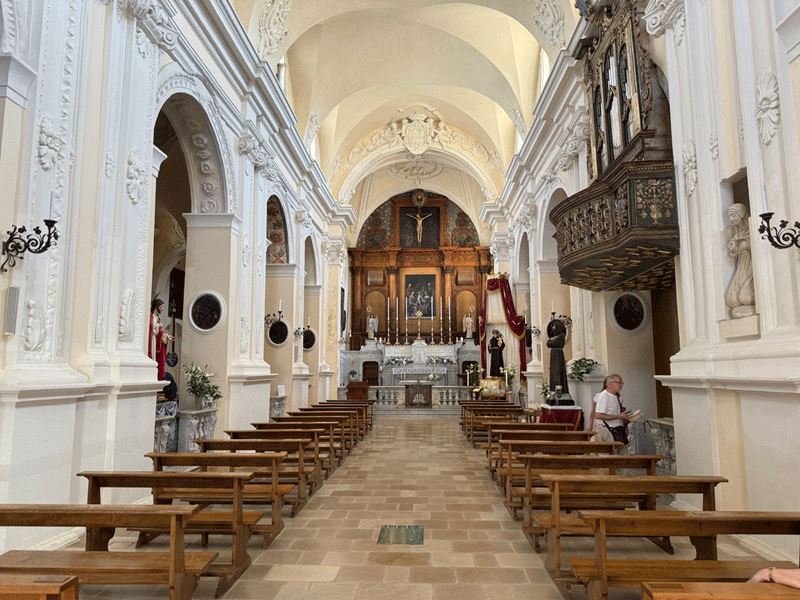
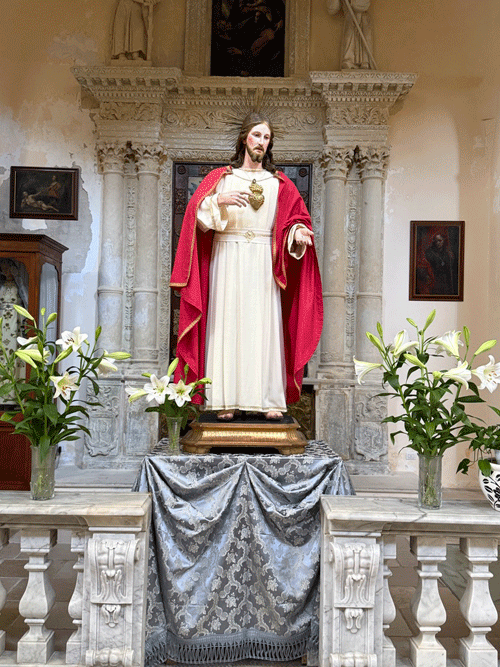
Chiesa di San Francesco d'Assisi
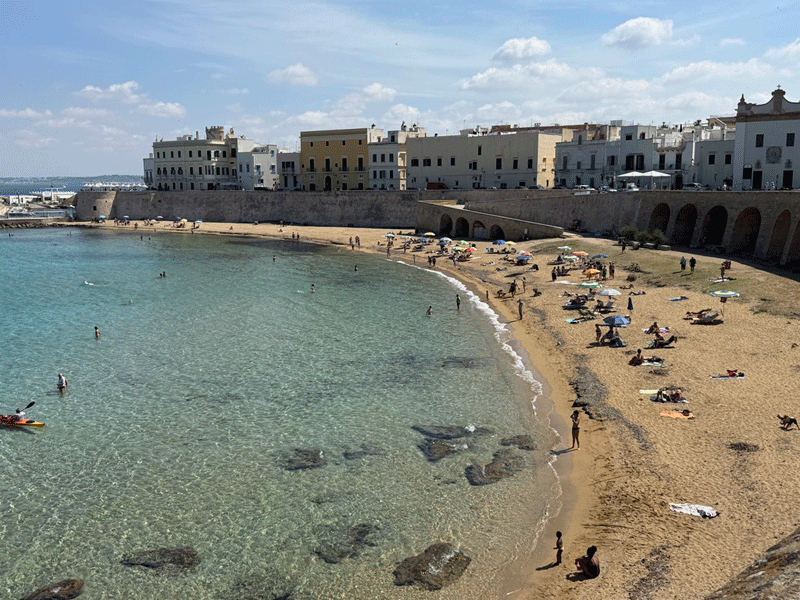
| Spiaggia la Puritate beach under the city walls. |
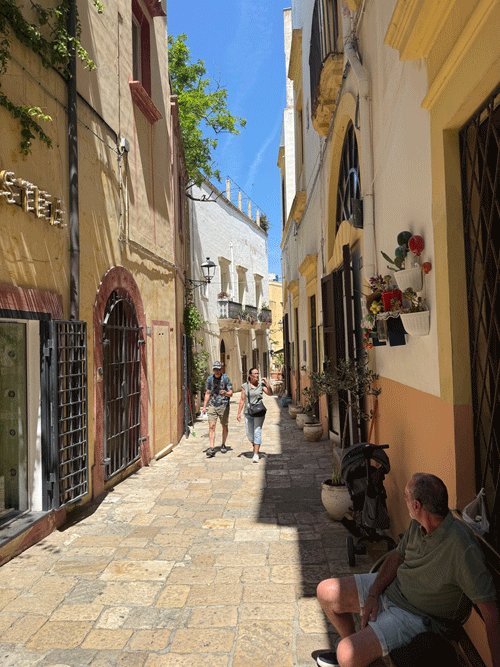
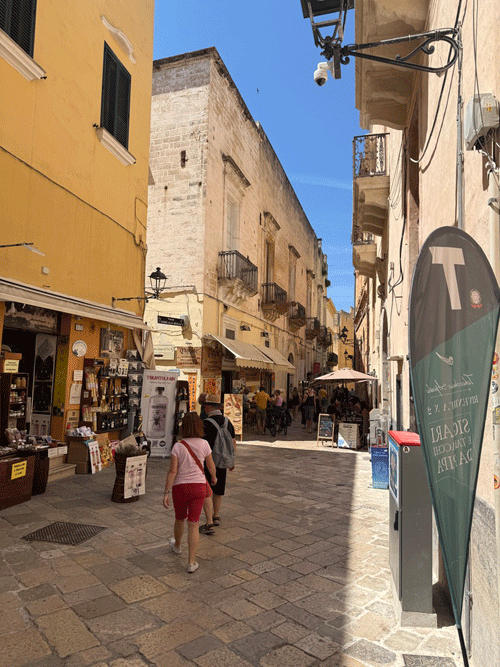
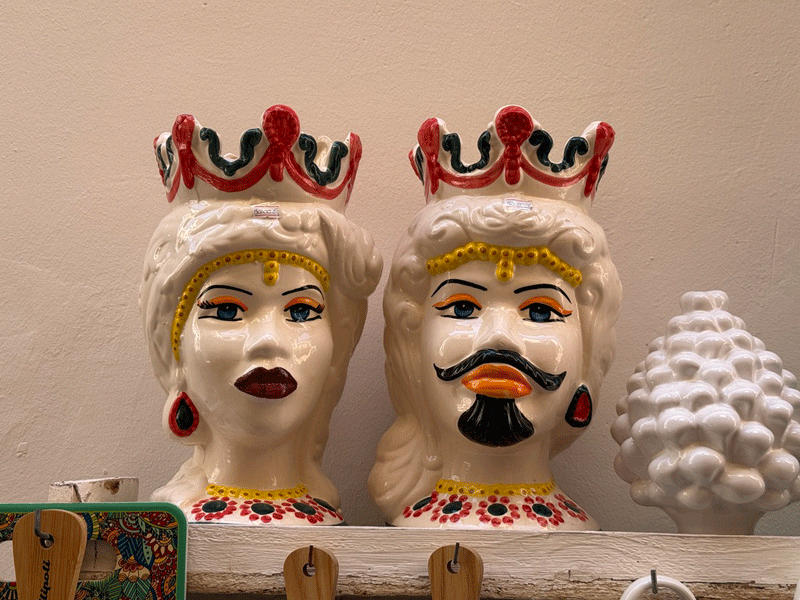
More Testa Di Moro for sale
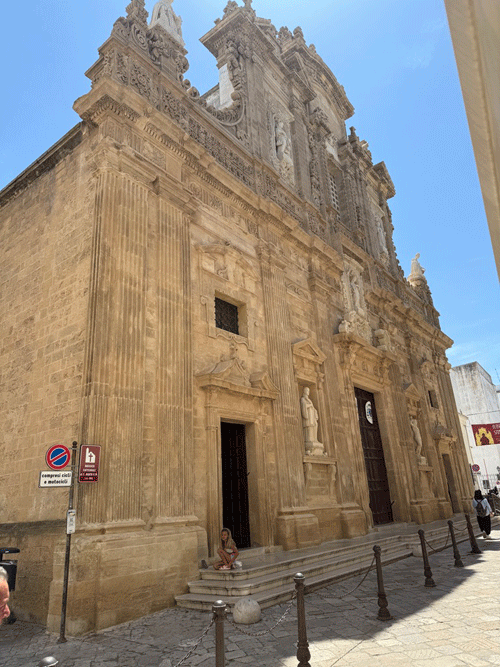
| Baroque Cathedral of Sant'Agata (17th century). It has a richly decorated façade in carparo, a local limestone, with niches featuring statues of saints. The interior is on the Latin cross plan, with Baroque altars, including a polychrome high altar by Cosimo Fanzago. |
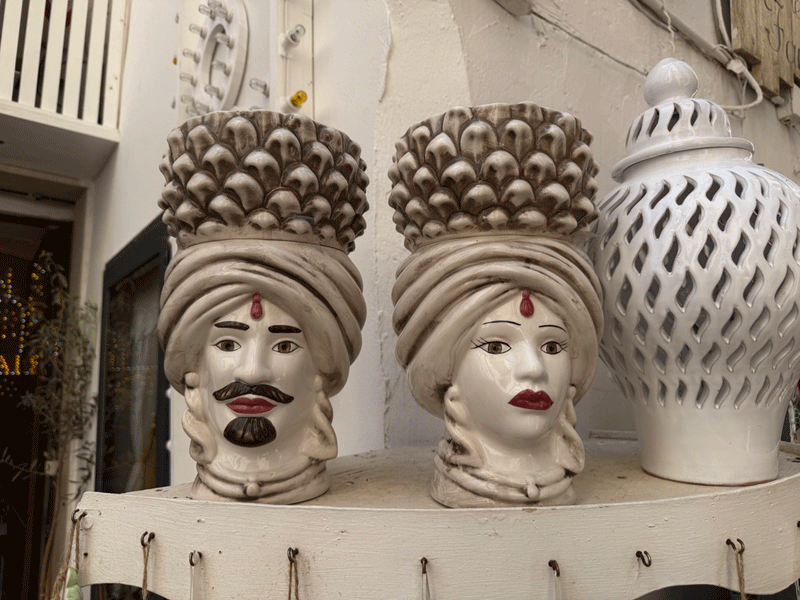
And yet more Testa Di Moro for sale. It is interesting to note the different styles available
|